
|
|
||||||||||||||||||


| 2026-2027 Electoral Calendar, latest official version |

|
 |
|
|
|
|
|
|
|||||||
|
|
Haiti - Health : Treated drinking water, alarming findings (report)
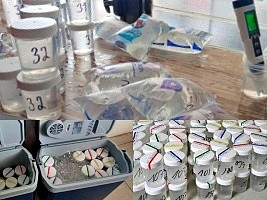
As part of its mission to protect consumers, the Ministry of Commerce and Industry (MCI) has published the results of an in-depth study conducted between August 2025 and January 2026 on the quality of treated and packaged water (bottles, sachets, five-gallon containers, and kiosks) in the Port-au-Prince Metropolitan Area (RMPP). Analysis of 109 Samples : Bacteriological Contamination : 83.5% of the samples showed indicators of fecal contamination (total coliforms, fecal coliforms, fecal streptococci, and E. coli). Presence of E. coli : Detected in 15.6% of the overall samples, and more specifically in 20% of the sachet water samples and 19% of the kiosks. Mineral Deficiency : 97.5% of tests show a conductivity below 50 μS/cm, while the WHO sets a threshold of 1200 μS/cm, indicating water that is too low in essential minerals. Major Deficiencies Throughout the Supply Chain : Battery Water : Battery bags are considered impossible to sterilize before filling (unlike bottles) and are vulnerable during transport and storage. Kiosks : Lack of effective disinfection, use of undisinfected tanker trucks. Technical Shortcomings : Failure to implement bacteriostatic (growth-inhibiting) and bactericidal (bacterial-killing) treatments. The Ministry of Health informs the public that the bacteria most commonly detected in water (Total and Fecal Coliforms) do not represent an imminent or major risk to the health of consumers in general. Those at risk are people with weakened immune systems and children, who should refrain from drinking any water, especially bagged water sold at kiosks. Furthermore, consumers suffering from gastroenteritis (vomiting, diarrhea, abdominal cramps, fever, etc.) after consuming the water are encouraged to file complaints through the complaint system established by the Ministry of Commerce and Industry (MCI) (https://mci.gouv.ht/doleances.php). In light of these findings, the MCI urges suppliers to ensure the regular disinfection of tanker trucks, reservoirs, and water towers, manage water traceability, install additional equipment in kiosks (filters, UV sterilizers), and employ well-trained technical staff in water treatment and quality control. Download the complete study (PDF in French, 28 pages) : https://www.haitilibre.com/docs/Etude-sur-la-qualite-des-eaux.pdf HL/ HaitiLibre
|
|






|
|
Why HaitiLibre ? |
Contact us |
Français
Copyright © 2010 - 2026 Haitilibre.com |