
|
|
||||||||||||||||||


| 2026-2027 Electoral Calendar, latest official version |

|
 |
|
|
|
|
|
|
|||||
|
|
Nearly 90% of the Pine Forest destroyed by Haitians 06/08/2026 10:08:00 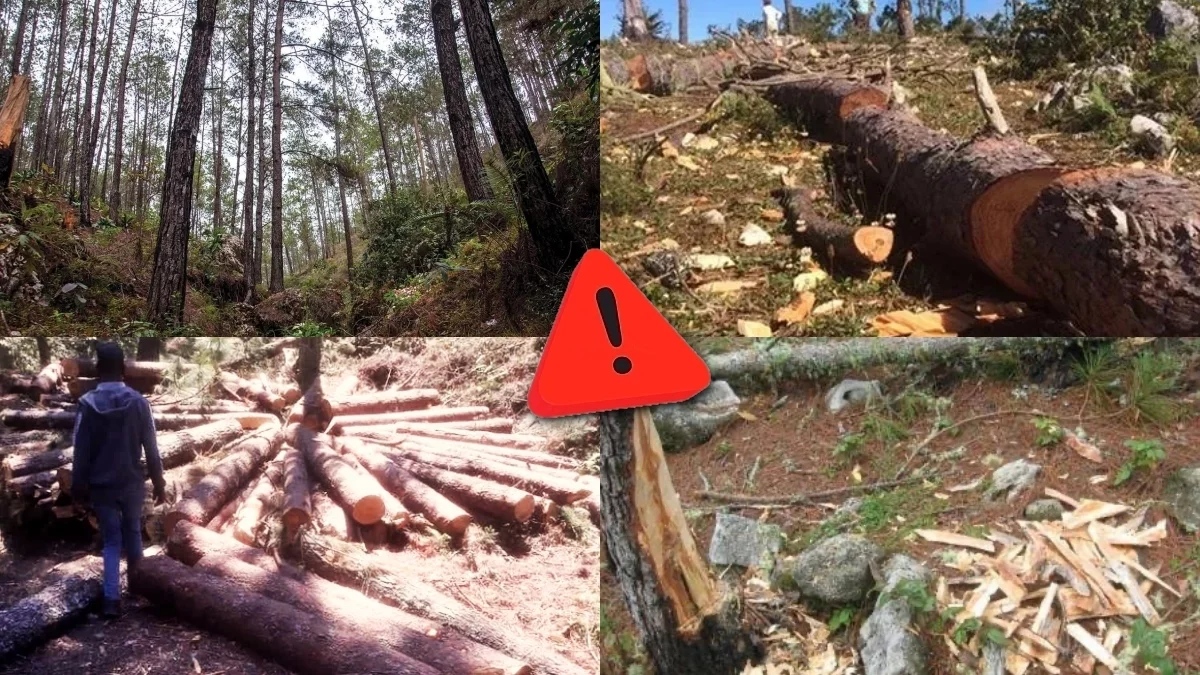
The main human-caused damage to the Pine Forest in Haiti is massive deforestation for the production of building materials or charcoal, and subsistence slash-and-burn agriculture. Due to these major human pressures, this ecological reserve, classified as a protected area on October 6, 1937, has shrunk from 40,000 hectares at the beginning of the 20th century to only 5,000 hectares today (source: COE-H). Major Human-Made Degradation : • Illegal Logging and Scoping: Driven by extreme financial hardship, local populations illegally cut down trees to resell them as planks, beams, 4x4 lumber, and other timber products, or to supply the charcoal market. • Bark stripping: Individuals remove the bark from the base of pine trees to collect kindling (used for firewood). This practice slowly kills the tree and makes it more vulnerable to storms. • Aggressive agricultural expansion: Entire sections of the forest are burned to establish vegetable crops (such as potatoes), destroying local biodiversity. • Human-caused fires: Numerous vegetation fires are deliberately set during the dry season to clear land or as acts of vandalism. Critical environmental consequences : • Severe soil erosion : Without the pine roots to hold the soil in place, nutrients are washed away. The soil becomes sterile and unable to retain water. • Deadly natural disasters : The loss of vegetation cover exacerbates the violence of floods and causes devastating landslides during storms and hurricanes. • Drying up of water sources : Forest degradation blocks rainwater infiltration into groundwater, threatening the water reserves of the entire region... The Collective of Ecological Organizations of Haiti (COE-H) is launching an urgent appeal to the Haitian authorities, the UNESCO Human and Biosphere Programme Council, and all national and international partners to prevent the disappearance of the Pine Forest, Haiti's first Biosphere Reserve recognized by UNESCO in 2012. According to observations made on the ground on July 5, 2026, the degradation of this protected area has reached a critical level. Hundreds of pine trees have recently been felled and then cut into logs for the production of planks, beams, 4x4s, and other lumber products. The findings also reveal traces of slash-and-burn agriculture. This combination of illegal logging and deforestation accelerates the destruction of the forest cover, weakens the soil, and permanently compromises the forest's capacity to protect water resources. The security crisis gripping the Port-au-Prince metropolitan area is significantly increasing the pressure on natural resources. Massive population displacements toward the southeastern municipalities are leading to the rapid occupation of forest areas for housing construction, the development of new agricultural activities, and logging as a source of income. At this rate of destruction, several specialists believe that the near-total disappearance of the Pine Forest could occur well before 2050, seriously jeopardizing Haiti's international commitments regarding biodiversity and the fight against climate change. Without appropriate territorial planning and effective monitoring systems, this dynamic is accelerating the degradation of an already extremely fragile ecosystem. The COE-H is also concerned about the progressive degradation of La Visite National Park, another major protected area in the Massif de la Selle. Despite its protected status, several sectors of the park are experiencing intensified logging, burning, and agricultural expansion. These practices are progressively reducing forest cover, disrupting natural habitats, and compromising the essential hydrological functions of this ecosystem. Faced with this emergency, the COE-H believes that current responses remain largely insufficient. "Every tree felled brings Haiti closer to an ecological, water, and climate catastrophe." Urgent recommendations from the COE-H : 1. Establish a National Emergency Committee bringing together the State, local authorities, universities, civil society, and environmental organizations to assess the actual state of the reserve and define a new governance structure. 2. Deploy without delay a permanent monitoring system, including forest rangers and control mechanisms, throughout the Pine Forest. 3. Develop an emergency national land-use plan, led by the CIAT (Inter-ministerial Committee for Territorial Development), to offer sustainable solutions to displaced populations while limiting pressure on protected areas. 4. Mobilize national and international funding to restore degraded ecosystems, protect water sources, support local communities, and launch a large-scale forest restoration program. Learn more about COE-H : The Collective of Ecological Organizations of Haiti (COE-H) brings together several organizations committed to environmental protection, including FORE, NOEAE, Ecovert-Haiti, FADECOV, MADECTH, and Maison Verte. The Collective works for ecosystem conservation, landscape restoration, and the promotion of sustainable environmental governance in Haiti. HL/ S/ HaitiLibre
|
|





|
|
Why HaitiLibre ? |
Contact us |
Français
Copyright © 2010 - 2026 Haitilibre.com |