
|
|
||||||||||||||||||


| 2026-2027 Electoral Calendar, latest official version |

|
 |
|
|
|
|
|
|
|||||||
|
|
Haiti - Health : Weaknesses and malfunction at MSPP
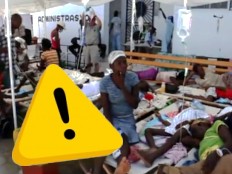
The Comite de Coordination des ONGs Internationales en Haiti (CCO HAITI) calls on the national authorities, the international community and donors to engage in saving the lives of the thousands of Haitians threaten by the cholera epidemic that is affecting the country. According to the World Health Organization (WHO) more than 42 000 new cases and nearly 400 deaths have been reported since the beginning of 2012 and numbers are increasing. WHO estimates that approximately 200,000 persons will be affected during the 12 month period ending in December. However, the limited capacity of the Government of Haiti (GoH) to effectively address the prevention and treatment of the disease and a significant reduction in funding are jeopardizing the effectiveness of the ongoing cholera response. The cholera outbreak that has already claimed thousands of lives all over the country remains a major threat to public health. Cholera prevention and response should be a key priority for the Haitian Government. Further efforts need to be made to improve the quality and reliability of data collection systems. Thorough evaluations are needed to identify and address the problems in the epidemiological surveillance system. According to MSPP, only 57.8% of the 341 daily cholera reports were submitted by departments during the period from March 27 to April 26, 2012. This lack of accurate reporting seriously impacts the capacity to effectively respond. Furthermore, many public health workers in the Cholera Treatment Center (CTCs) have not received salaries for several months and there are reports of strikes by front line medical staff to redress this situation. This is a serious issue negatively affecting the effectiveness of the cholera response and it needs to be urgently addressed. In addition, there is evidence that the MSPP struggles to carry out its work efficiently due to poor logistics and inefficient fleet maintenance. This seriously hinders the material distribution within the CTCs, Cholera Treatment Units (CTUs) and Acute Diarrhea Treatment Centers (ADTCs), and affects the appropriate collection of cadavers. Necessary arrangement should be made to correct the situation. Overall, the MSPP must once again reinforce its leadership and coordination roles at both central and departmental levels. Donors must provide sustained and adequate funding to support a comprehensive and integrated approach to cholera prevention and care. Although less severe than the cholera outbreak last year, the current situation on the ground is much worse than statistics portray. And yet, a shortage of funding has translated into fewer health partners and created serious gaps in coverage. From August, 2011 to May, 2012, the number of Cholera Treatment Centers (CTCs) has declined from 38 to 20, and the number of Cholera Treatment Units from 205 to 74. In 2012, additional donor support is needed to help the MSPP and humanitarian actors address all phases of cholera response including surveillance, medical treatment and technical assistance, new community and primary health programs, and capacity-building for national medical personnel and institutions. HL/ HaitiLibre
|
|







|
|
Why HaitiLibre ? |
Contact us |
Français
Copyright © 2010 - 2026 Haitilibre.com |