
|
|
||||||||||||||||||


| 2026-2027 Electoral Calendar, latest official version |

|
 |
|
|
|
|
|
|
|||||
|
|
Haiti - Agriculture : The Minister advocates for an agricultural sector capable of feeding the Haitian people and withstanding crises 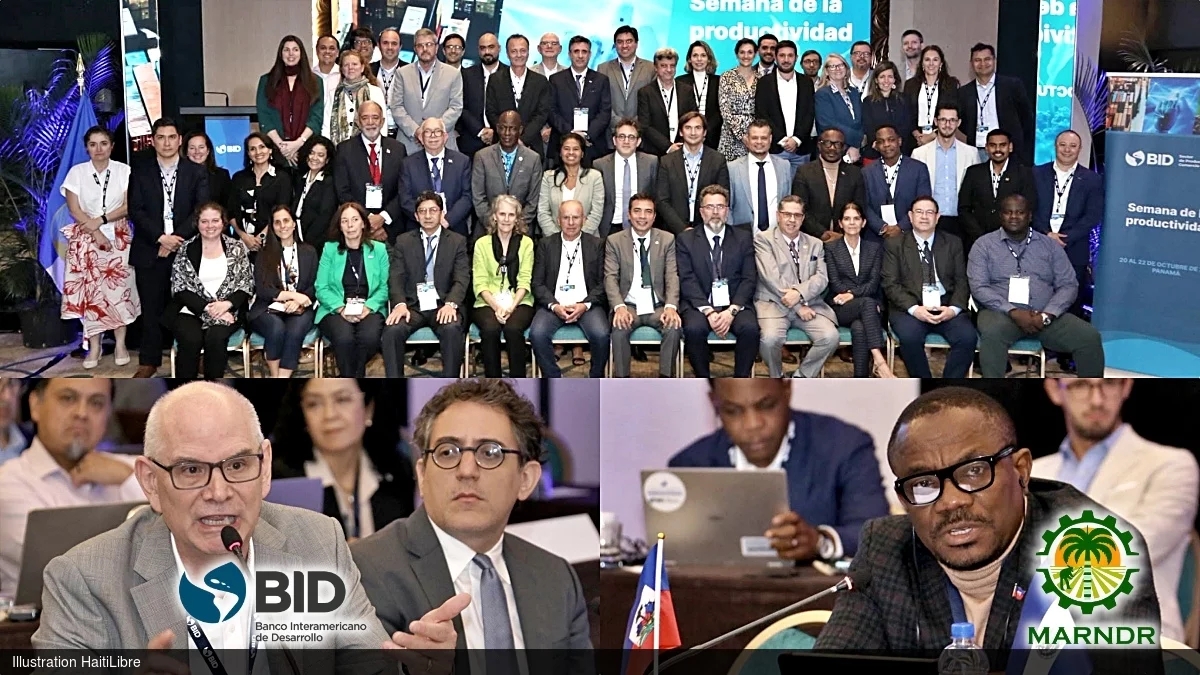
On Thursday, October 22, 2026, during the Regional Dialogue on Public Policy for Agriculture and Rural Development, organized in Panama by the Inter-American Development Bank (IDB) under the theme "Building Productive and Resilient Agri-Food Systems", Haiti’s Minister of Agriculture (MARNDR), Marcelin Aubourg, advocated for the development of a more productive and sustainable Haitian agricultural sector, one capable of contributing to the country’s food security in the face of economic, climatic, and security crises. Addressing the food vulnerability that affects a portion of Haiti’s population, the Minister intends to make the strengthening of domestic production a cornerstone of the nation’s agricultural policy. For the Haitian authorities, while emergency responses remain essential to support vulnerable populations, they must be coupled with long-term investments to bolster the country’s productive capacity and gradually reduce its reliance on food imports. The Minister emphasized the need to improve farmers' access to quality seeds, appropriate equipment, agricultural advisory services, and production technologies. The rehabilitation of irrigation infrastructure, better water resource management, and the modernization of farms are also among the priorities highlighted by Minister Aubourg to increase yields and support producers. Climate change, the degradation of natural resources, insecurity, and disruptions to supply chains all pose significant challenges to agricultural activity and food stability. In light of this reality, Aubourg advocates for production systems capable of better withstanding shocks and preserving the livelihoods of rural communities. He specifies that this approach entails, among other things, the development of sustainable hydro-agricultural infrastructure, soil and water conservation, crop diversification, and the establishment of financing mechanisms tailored to the needs of producers affected by crises. He also underscored the importance of strengthening anticipation and early-warning systems to better prepare for interventions and mitigate the impact of disasters on agricultural production. Beyond the mere availability of food, food security requires that households have regular access to a diverse, nutritious, and affordable diet. Consequently, developing national value chains for food crops, fruits, vegetables, and animal-based products emerges as a key tool for improving market supply. At the conclusion of this regional dialogue, the Minister of Agriculture also placed special emphasis on reducing post-harvest losses by enhancing storage, preservation, processing, and transport capacities. He noted that such investments could help safeguard agricultural produce, boost producers' incomes, and improve consumer access to local food products. Through this regional dialogue, Haiti also aims to promote a form of cooperation that is better aligned with local realities. The Minister expressed a desire for future support mechanisms from the IDB to prioritize productive investments, the strengthening of agricultural institutions, and the resilience of food systems. According to Aubourg, technical and financial partners must align their interventions with the priorities established by national authorities and contribute to the sustainable development of institutional capacities. The ultimate goal is to ensure better project coordination, more rigorous monitoring of investments, and lasting results that endure beyond the programs' implementation periods. The challenge now lies in translating these guidelines into concrete investments capable of strengthening producers' capacities and sustainably improving the living conditions of rural communities. HL/ HaitiLibre
|
|




|
|
Why HaitiLibre ? |
Contact us |
Français
Copyright © 2010 - 2026 Haitilibre.com |