
|
|
||||||||||||||||||


| New revised electoral calendar (Oct. 28, 2026) |

|
 |
|
|
|
|
|
|
|||||
|
|
Haiti - Agriculture : Follow-up visit to World Bank projects in the Nippes department 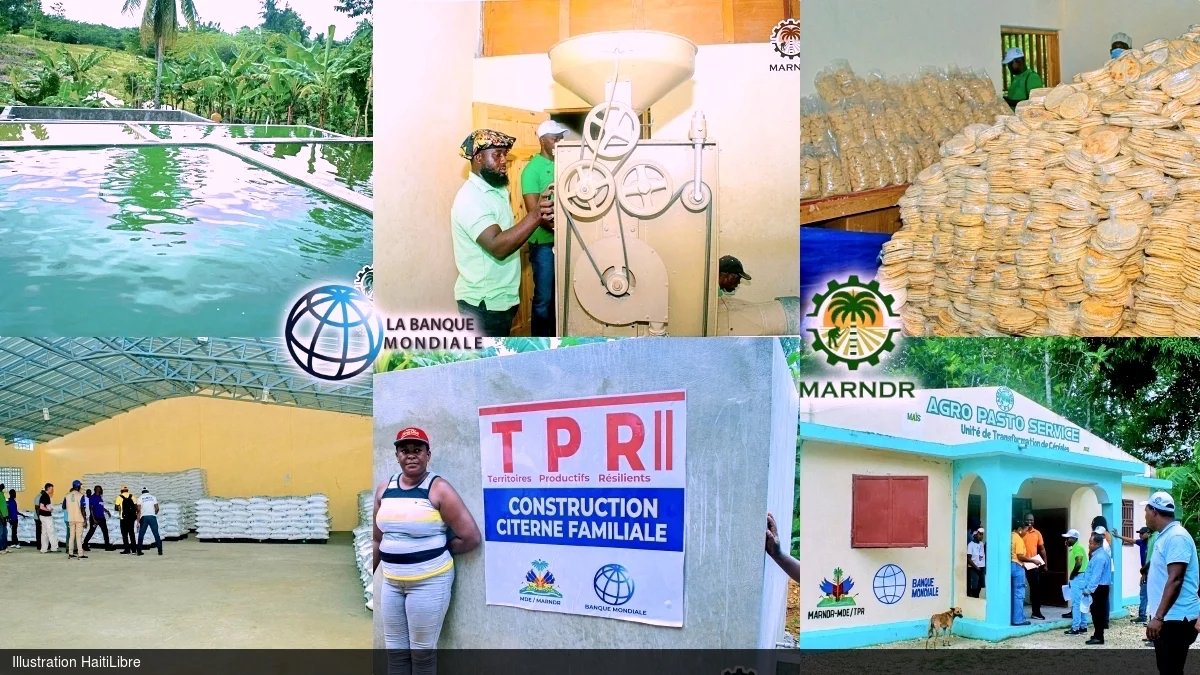
As part of the monitoring and support for the implementation of agricultural investments funded by the World Bank (WB) specifically under the Resilient Agriculture for Food Security Project (PARSA) and the Resilient Productive Territories Project (TPR II) a World Bank delegation, accompanied by representatives from the Ministry of Agriculture (MARNDR) and the respective project teams, conducted a tour of the Nippes department this week, traveling from Fonds-des-Nègres to Anse-à-Veau. The mission provided an opportunity to evaluate the achievements of PARSA and TPR II, particularly in areas such as agri-food processing, the storage and marketing of agricultural products, access to water, and fish farming. The delegation met with several beneficiary organizations to discuss the results achieved, the operational status of the infrastructure, and the challenges that must be addressed to ensure the sustainability of these investments. Strengthening local capacity for processing cassava, rice, and corn : In the commune of Fonds-des-Nègres, strengthening local capacity for the processing of cassava, rice, and corn is a key area of intervention for the Resilient Productive Territories Project (TPR II). During the mission, the World Bank delegation, accompanied by project managers, visited two processing facilities established with support from TPR II. The first stop on the visit brought the delegation to a facility operated by the "Groupement des agriculteurs pour le développement économique et environnemental" (Farmers' Group for Economic and Environmental Development), which specializes in processing cassava. This facility produces items such as cassaves (cassava flatbreads), konparèt fòs (a traditional local pastry), flour, and starch. On-site, the delegation observed the various stages of the processing workflow, as well as the equipment provided to the organization—including graters, presses, cooking surfaces, and sieves. This equipment helps increase production capacity and facilitates access to various commercial outlets, such as supermarkets and school canteens. According to the organization’s leadership, approximately 60 tons of cassava have been processed over the past twelve months. Rice and Corn Processing : The delegation then traveled to the locality of Jovange, where they visited a processing unit managed by Agro-Pasto Service (APS). This facility processes rice and corn grown in the area, specifically from the Abraham Plain. It provides local rice farmers with nearby husking services, streamlining the processing of harvests and their subsequent entry into the market. Over the last twelve months, Agro-Pasto Service has produced approximately 216 tons of white rice. This processing capacity helps add value to local rice, supports the activities of producers, and strengthens commercial supply chains within the region. Collection and Storage for School Canteen Supplies : The tour continued in the commune of Petite-Rivière-des-Nippes, where the delegation visited an aggregation center provided to the Network of Agricultural Producers of the Nippes (ROPANIP) by the PARSA project. This infrastructure serves as a vital link in organizing the supply chains for school canteens. It facilitates the collection, storage, and distribution of fresh and dry agricultural products intended to supply 39 schools, notably in the communes of Paillant, Fonds-des-Nègres, Miragoâne, Anse-à-Veau, and Petit-Goâve. In addition to this infrastructure, there is a warehouse for storing cereals, which will enable the network to improve its capacity for preserving and managing supplies. This investment helps structure relationships between local producers and schools, while ensuring a steady availability of agricultural produce for the students' meals. Family Cisterns : Also in Petite-Rivière-des-Nippes, the delegation visited a family cistern built as part of the TPR II project. This initiative addresses the challenges of accessing water faced by many households in the area. Discussions with local residents provided a better understanding of the daily challenges related to water access—notably the long distances that must be traveled, the costs incurred when purchasing water, and the reliance on rainfall to replenish reserves. The construction of household cisterns offers a concrete response to the communities' needs, improving water availability and strengthening their resilience during periods of drought. Fish ponds to diversify productive activities : The tour continued to the locality of Abraham, where the delegation visited a fish-farming facility consisting of eleven ponds, developed under the TPR II project for the benefit of the "Organisation des Paysans pour le Développement d’Abraham" (Farmers' Organization for the Development of Abraham). This facility aims to foster aquaculture in the region and boost local fish production. It creates new opportunities for community members, while contributing to the diversification of rural economic activities and increasing the availability of fish products in local markets. Anse-à-Veau : the final stop on the departmental tour : To conclude the departmental tour, the delegation traveled to the commune of Anse-à-Veau—specifically to the locality of O-Rouck—where they visited several infrastructure projects. This final leg provided an opportunity to examine investments designed to improve production conditions, strengthen community infrastructure, and enhance the capacity of rural populations to cope with climate-related risks. Beyond observing the infrastructure, meetings with the beneficiaries formed a significant part of this mission. Farmers, organizational leaders, and other stakeholders supported by the PARSA and TPR II projects had the opportunity to present their results, share their experiences, and highlight the challenges they continue to face in carrying out their activities. Spanning from Fonds-des-Nègres to Anse-à-Veau—and including Petite-Rivière-des-Nippes and Abraham—this mission underscored the complementary nature of the PARSA and TPR II interventions in the Greater South region. From the processing of agricultural products and the enhancement of storage capacity to the supply of school canteens, access to water, and the development of fish farming, these investments contribute to structuring agricultural value chains and strengthening the resilience of rural communities. HL/ HaitiLibre
|
|





|
|
Why HaitiLibre ? |
Contact us |
Français
Copyright © 2010 - 2026 Haitilibre.com |