
|
|
||||||||||||||||||


| 2026-2027 Electoral Calendar, latest official version |

|
 |
|
|
|
|
|
|
|||||
|
|
The IMF highlights Haiti's «exceptionally difficult» situation 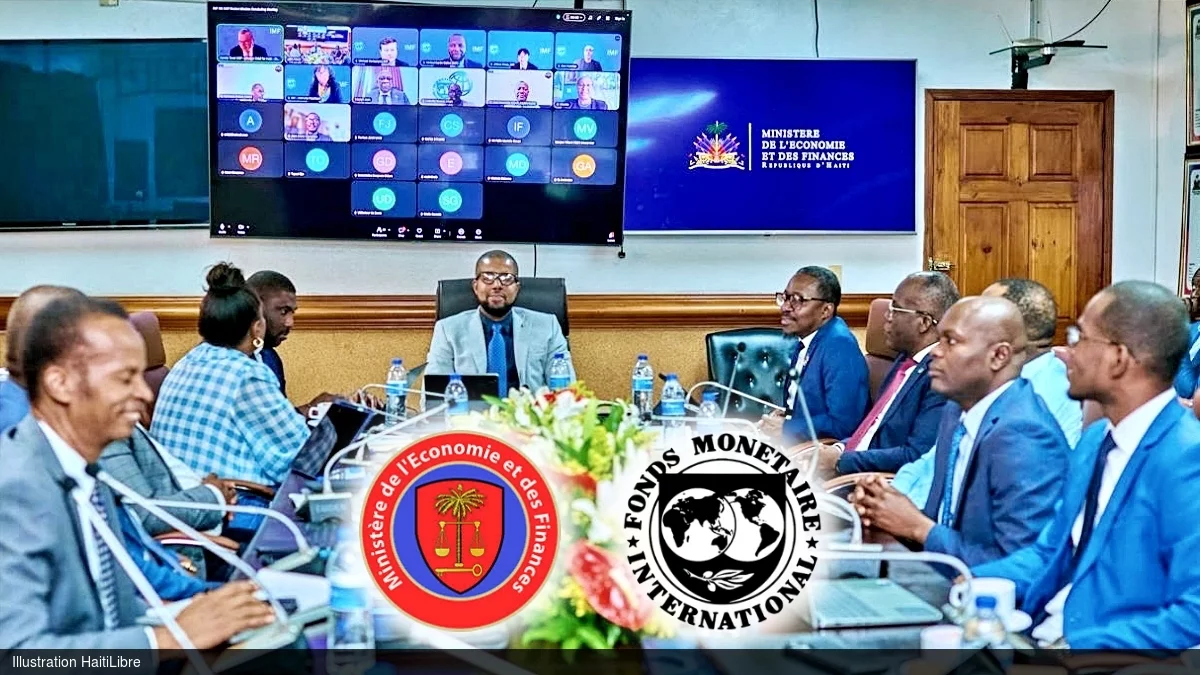
On September 28, 2026, the International Monetary Fund (IMF) staff and the Haitian authorities reached a staff-level agreement on the remote mission for the fourth review of the staff-monitored program, subject to approval by IMF management. Program implementation continued in a particularly challenging environment. By the end of June 2026, all quantitative and indicative targets had been met, with the exception of the ongoing target for external arrears. These arrears accumulated due to administrative and capacity constraints but were quickly cleared. The structural reform program is progressing, albeit with some delays. An IMF staff team led by Camilo E. Tovar conducted a remote mission from September 14 to 25, 2026, to assess progress under the staff-monitored program for Haiti. At the conclusion of the mission, Tovar made the following statement: "Haiti is facing an exceptionally difficult macroeconomic situation, marked by persistent insecurity, precarious humanitarian and social conditions, and multiple adverse shocks. Rising oil prices are weighing on the budget and external balances and contributing to a higher cost of living, while the end of Temporary Protected Status (TPS) granted to Haitian nationals in the United States could lead to a reduction in private remittances and exacerbate economic and humanitarian vulnerabilities. These difficulties are occurring within the context of a fragile political transition and electoral preparations. Despite these constraints, the authorities have continued to implement their economic program and maintain macroeconomic stability. "During fiscal year 2026, economic activity is expected to contract for the eighth consecutive year (between -1.9% and -1.5%, according to the Central Bank of Haiti).” Persistent insecurity, rising oil prices, and weak export prospects in the textile and apparel sectors continued to weigh on economic activity. Inflation, largely due to exchange rate stability, is projected to reach approximately 16% year-on-year in fiscal year 2026, well below the peak of over 32% recorded in October 2025. The external position continues to benefit from strong private transfers without reciprocal obligations and adequate levels of international reserves. The current account balance is expected to remain in surplus despite the weak trade balance, while gross international reserves remain at an adequate level, equivalent to approximately seven months of projected imports. However, a prolonged increase in fuel import costs remains a source of vulnerability for the external sector. "Fiscal policy is under increasing strain from exceptionally low revenue levels, higher oil prices, and urgent and critical needs in the areas of security, humanitarian assistance, and development. To create fiscal space for these priorities while preserving macroeconomic stability, it will be necessary to strengthen revenue mobilization, continue efforts to consolidate tax and customs administrations, adopt realistic spending planning and prioritization, and ensure prudent financing without resorting to non-concessional loans [...] "The risks to the outlook are mixed. Further setbacks in security, higher oil prices, and delayed pass-through of fuel and minimum wage increases could weigh on growth and keep inflation high. Other downside risks include reduced private unsecured transfers following the end of TPS and a potential El Niño-related drought.” Conversely, lower oil prices, stronger progress on security, and a smooth electoral process, reducing uncertainty and boosting confidence, could support a more robust recovery. "Program implementation continued in a particularly challenging environment. As of June 31, 2026, all quantitative and indicative targets were met, with the exception of the ongoing target of no external arrears accumulating. These arrears temporarily accumulated due to administrative and capacity constraints but were quickly cleared. Net international reserves reached approximately US$1.9 billion at June 31, 2026, well above the program floor. The ceiling for central bank financing of the non-financial public sector was also met at June 31, 2026. Implementation of the reform program is progressing, despite some delays related to capacity constraints and a very challenging operating environment. The authorities also reported progress in the areas covered by the upcoming structural benchmarks and reaffirmed their commitment to continuing the implementation of the reform program. The reference program will continue to focus on the following priorities : "Strengthening governance and financial integrity to enhance confidence in public institutions and the rule of law […] "Strengthening revenue mobilization to meet priority spending needs. The entry into force of the new tax code on January 1st, 2027, will mark a significant milestone in Haiti’s tax reform agenda, consolidating and modernizing the tax framework [...] "[...] Strengthening cash management, public investment management, and commitment control, as well as continuing to consolidate the Treasury Single Account, remain essential to improving budget execution and reducing fiscal risks. Continued efforts to strengthen payroll integrity and management could free up space for priority spending. Improving expenditure traceability and beneficiary identification and targeting would help ensure that social assistance reaches intended populations.” The effective use of residual resources from the 2023 IMF assistance under the Food Shock Response Window, while following up on the findings of ongoing monitoring and audit reports, will be important to support vulnerable households, strengthen the delivery of social assistance, and improve accountability and transparency. Maintaining prudent debt management practices and mobilizing sufficient resources to ensure timely debt service remain essential to preserving fiscal sustainability and mitigating financing risks. "Maintaining confidence in the monetary and exchange rate policy framework. The Bank of the Republic of Haiti (BRH) remains committed to preserving price and exchange rate stability, which underpins policy credibility within the Staff-Monitored Program. Maintaining adequate reserves is essential to support confidence and strengthen resilience to exogenous shocks [...] “[…] Progress is being made in implementing risk-based supervision, particularly through the evaluation of risk analysis frameworks and rating matrices, as well as the work to finalize the new accounting plan for financial institutions […] “Improving data quality and its timely production. The BRH has completed the publication of the financial statements for fiscal year 2024 and the independent auditors’ report, and work has begun on addressing the audit reservations and recommendations for fiscal year 2023. The timely publication of the financial statements and audit reports for fiscal years 2025 and 2026 will help maintain the regularity of audit cycles and strengthen transparency, accountability, and the credibility of policies [...] "Mobilizing support from development partners to advance reforms and manage fiscal risks. Timely external assistance in the form of grants and concessional financing to preserve debt sustainability, coupled with continued capacity building, will help address urgent humanitarian, security, and development needs, strengthen policy implementation, and support institutional reforms. This support, with stringent evaluation and transparency requirements for donor-financed operations, can help preserve the public sector balance sheet, consolidate progress under the program, and foster a sustainable recovery that can improve the lives of the Haitian people [...] The IMF staff team met with Serge Gabriel Collin, Minister of Economy and Finance, and Ronald Gabriel, Governor of the Bank of the Republic of Haiti, as well as other senior officials. The mission expresses its gratitude to the Haitian authorities for their close cooperation and the open and constructive discussions held throughout its work. The International Monetary Fund (IMF) warned on Monday of the "exceptionally difficult" situation facing Haiti, whose GDP has declined for the eighth consecutive year and whose outlook is bleak following the end of its protected migrant status in the United States. Haiti is under a Fund Service Monitoring Program (FSMP) until June 2027. FSMPs are informal arrangements through which a country in difficulty agrees to temporarily place its accounts and performance under the supervision of the Fund. "The implementation of the program has continued under exceptionally difficult conditions,” the Fund explained after a remote meeting with the country’s monetary and economic authorities. "Insecurity continues to hamper economic activity and the delivery of essential services, further exacerbating an already critical humanitarian situation,” the statement added after this review of the accounts. "Rising oil prices are impacting the fiscal and external situation and contributing to the increased cost of living, while the end of Temporary Protected Status (TPS) for Haitians in the United States could reduce remittances and exacerbate economic and humanitarian vulnerabilities," the report states. The U.S. Supreme Court has authorized the government to revoke TPS, which has been in effect for Haitians since 2010. An estimated 350,000 Haitians live in the United States under this program. "Economic activity is projected to contract for the eighth consecutive year in fiscal year 2026,” the experts add. Haiti has long been plagued by a political, economic, and security crisis, but the situation has deteriorated significantly in recent years. Of its roughly 11 million inhabitants, nearly 1.5 million are internally displaced persons due to gang violence, according to a report by the International Organization for Migration published in June. The country is scheduled to hold the first round of presidential and legislative elections in December 2026, and the second round in February 2027, according to an electoral calendar published at the end of July. HL/ SL/ HaitiLibre
|
|





|
|
Why HaitiLibre ? |
Contact us |
Français
Copyright © 2010 - 2026 Haitilibre.com |